Giddha: Where Punjabi Women Come Alive
The Soul of Punjab Expressed Through Dance
What Makes Giddha Unique Among Folk Dances
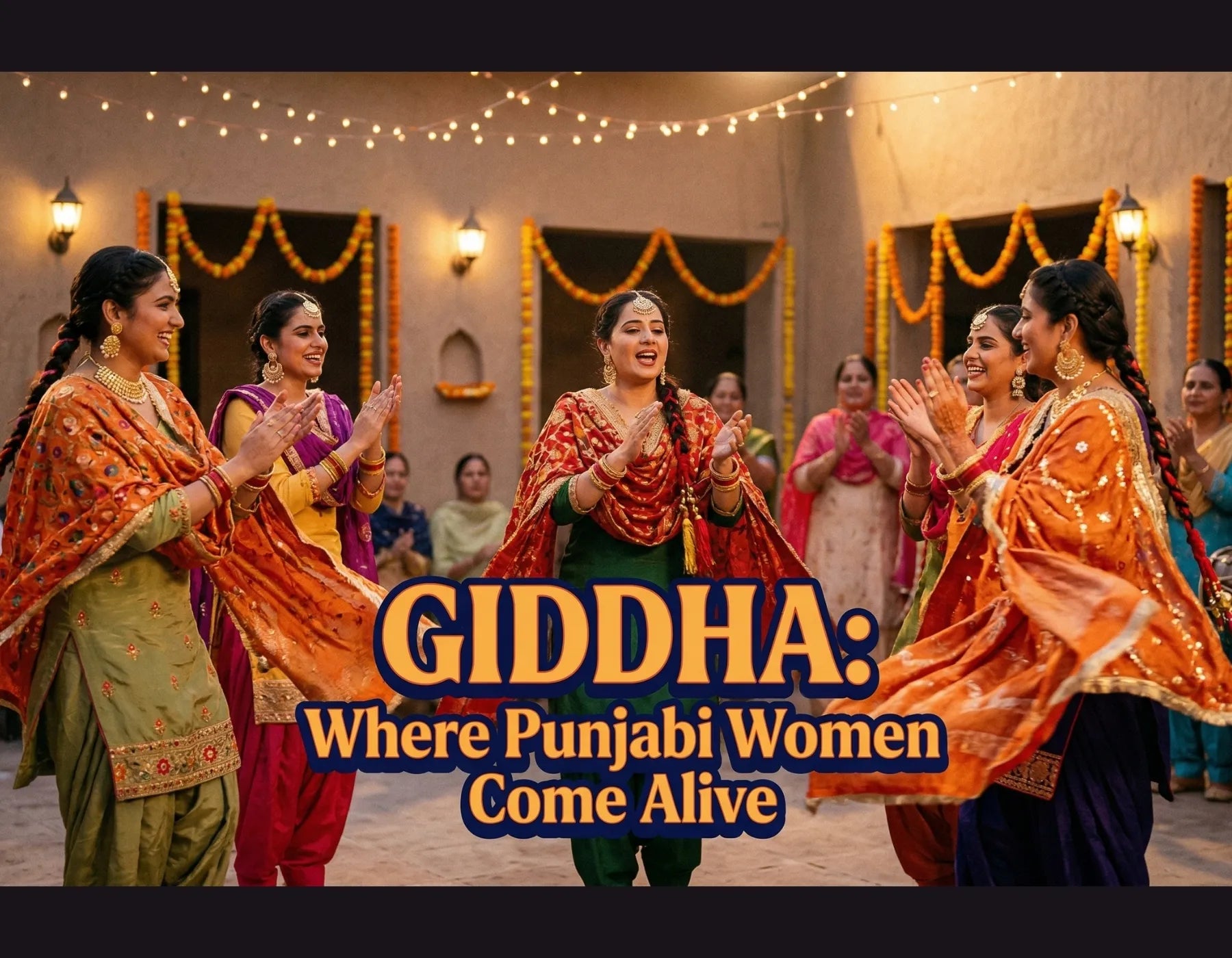
If you’ve ever witnessed Giddha, even for a fleeting moment, you’ll understand that it’s not just a dance—it’s a living, breathing expression of Punjabi identity. Unlike many structured classical dance forms, Giddha thrives on spontaneity, energy, and emotion. It’s raw, vibrant, and deeply personal. You won’t find rigid rules or strict choreography here. Instead, what you’ll see is a circle of women clapping rhythmically, stepping forward one by one, and telling stories through movement and song.
What truly sets Giddha apart is its emphasis on individuality within a collective space. Each performer gets her moment in the spotlight, where she delivers a “boli”—a short lyrical verse—while dancing expressively. These boliyan can be playful, teasing, emotional, or even rebellious. Think of it as a conversation happening through rhythm and movement rather than words alone. This interactive nature makes Giddha incredibly engaging, not just for performers but for the audience as well.
Another unique aspect is how accessible it is. You don’t need years of formal training to participate. If you can feel the beat, clap your hands, and express yourself, you’re already halfway there. That’s part of its charm—it belongs to everyone. Whether performed in a village courtyard or on an international stage, Giddha carries the same authenticity.
There’s also a strong sense of sisterhood embedded in the dance. Women come together, laugh, sing, and share stories, creating a powerful communal experience. In a world where many art forms can feel distant or elite, Giddha remains grounded, relatable, and incredibly human.
The Emotional Core of Giddha Performances
At its heart, Giddha is emotion in motion. It’s not about perfect steps or flawless execution; it’s about what you feel and how you express it. Every clap, every spin, and every lyric carries a piece of the dancer’s inner world. This is why no two Giddha performances ever feel the same—even if the same boliyan are used.
The emotional range in Giddha is astonishing. One moment, a performer might be teasing her brother-in-law with witty lyrics, and the next, she could be expressing longing for a loved one. These transitions are seamless, reflecting the complexities of everyday life. It’s almost like watching a series of mini-stories unfold, each filled with its own mood and message.
What makes it even more powerful is its authenticity. There’s no pretense here. When a woman laughs during Giddha, it’s genuine. When she sings about struggle or love, it comes from a real place. This honesty resonates deeply with audiences, making the experience both entertaining and emotionally rich.
Giddha also serves as an emotional outlet. In traditional settings, where women might not always have platforms to voice their thoughts openly, this dance becomes a space for expression. Through boliyan, they can share opinions, critique societal norms, or simply celebrate life’s small joys.
You could say Giddha is like a mirror—it reflects the joys, struggles, humor, and resilience of Punjabi women. And that’s what makes it unforgettable.
Historical Roots of Giddha
Origins in Ancient Punjabi Traditions
To truly understand Giddha, you have to travel back in time—long before stages, spotlights, and cultural festivals. Giddha originated in the rural heartlands of Punjab, where life revolved around agriculture, seasons, and community gatherings. Women would come together during harvests, weddings, and festivals, creating moments of joy through song and dance.
Historians often link Giddha to an ancient dance form known as “Ring Dance,” where participants formed a circle and moved rhythmically while singing. Over time, this evolved into what we now recognize as Giddha. The circle itself holds symbolic meaning—it represents unity, equality, and continuity.
In those early days, Giddha wasn’t a performance; it was a way of life. There were no audiences or judges—just women celebrating together. The boliyan they sang were inspired by daily experiences, from household chores to romantic tales. This grounding in everyday life is what gives Giddha its timeless appeal.
Interestingly, Giddha also served as a form of oral history. Through songs, women passed down stories, traditions, and values from one generation to the next. In a largely oral culture, this was incredibly significant. It ensured that cultural knowledge wasn’t lost but instead evolved with time.
Even today, when you watch Giddha, you can feel those ancient roots. The rhythms, the themes, and the communal spirit all echo a past that continues to shape the present.
Evolution Through Generations
While Giddha has deep traditional roots, it hasn’t remained static. Like any living art form, it has evolved, adapting to changing times while retaining its essence. Over the decades, Giddha has transitioned from village courtyards to global stages, and that journey is fascinating.
In earlier generations, Giddha was largely confined to women-only spaces. It was intimate and informal, often performed during family gatherings or local celebrations. But as Punjabi culture began to spread globally, so did Giddha. Today, you’ll find it performed at international festivals, university competitions, and even on television shows.
This evolution has brought both opportunities and challenges. On one hand, it has given Giddha a global platform, allowing more people to appreciate its beauty. On the other hand, there’s always the risk of losing authenticity when adapting for modern audiences. Choreographed routines, fusion elements, and stage effects can sometimes overshadow the raw, spontaneous spirit that defines Giddha.
Despite these changes, the core elements remain intact—the boliyan, the clapping, and the expressive storytelling. Younger generations are finding innovative ways to keep the tradition alive while making it relevant. Social media, for instance, has become a powerful tool for sharing performances and connecting with audiences worldwide.
The evolution of Giddha is a testament to its resilience. It shows that traditions don’t have to remain frozen in time to be meaningful. They can grow, adapt, and still hold onto their soul.
Cultural Significance of Giddha
Role in Festivals and Celebrations
If Punjab had a heartbeat, it would probably sound like the rhythmic claps of Giddha echoing through a festive gathering. Giddha is inseparable from Punjabi celebrations, whether it’s the vibrant festival of Teej, the harvest joy of Vaisakhi, or the colorful chaos of weddings. It doesn’t just accompany these occasions—it amplifies them, turning ordinary moments into unforgettable experiences.
Picture a Punjabi wedding: the courtyard is buzzing, dhol beats fill the air, and suddenly a group of women forms a circle. Within seconds, Giddha takes over. The energy shifts. Laughter becomes louder, movements more expressive, and the entire environment feels alive. This isn’t rehearsed entertainment—it’s spontaneous joy unfolding in real time. And that spontaneity is what makes it magical.
During festivals like Lohri and Teej, Giddha becomes a ritual of celebration. Women dress in their finest traditional attire, gather in groups, and perform with unmatched enthusiasm. These performances often stretch for hours, with each participant bringing her own flair to the circle. It’s not about competition; it’s about participation and shared happiness.
There’s also a deeper layer to this. Giddha acts as a social glue, strengthening community bonds. In rural settings especially, it provides a space for women to connect, share stories, and celebrate collectively. It bridges generations—young girls learn by observing elders, absorbing not just the dance but the cultural values embedded within it.
Even in modern urban settings, where lifestyles are fast-paced, Giddha continues to hold its ground. Cultural events, college festivals, and diaspora gatherings all feature Giddha as a centerpiece. It serves as a reminder of roots, identity, and the importance of celebrating together.
Symbol of Feminine Strength and Expression
Giddha isn’t just a dance—it’s a powerful statement. In many ways, it has always been a platform for female expression, long before conversations about empowerment became mainstream. Through Giddha, Punjabi women have found a voice—bold, unapologetic, and full of character.
The beauty of Giddha lies in its honesty. Women use boliyan to express everything from love and longing to frustration and satire. They tease relatives, comment on societal norms, and even challenge authority—all wrapped in rhythm and humor. It’s like poetry meets performance, with a touch of rebellion.
In traditional societies where women’s voices were often confined to private spaces, Giddha offered a unique outlet. Here, they could speak freely, laugh loudly, and take center stage. That’s no small thing. It transforms the dance into something much bigger than entertainment—it becomes a form of cultural resistance and self-expression.
There’s also a strong sense of confidence that Giddha fosters. When a woman steps into the center of the circle, all eyes are on her. She owns that moment. Her expressions, her movements, her voice—it’s all hers. And that experience can be incredibly empowering.
Modern interpretations of Giddha continue to carry this legacy forward. Today, you’ll see themes of independence, education, and identity woven into performances. It’s evolving, yes, but the core message remains the same: women have stories to tell, and Giddha is their stage.
The Art of Boliyan in Giddha
Meaning and Structure of Boliyan
At the heart of every Giddha performance lies something deceptively simple yet profoundly impactful—boliyan. These are short, rhythmic verses that drive the entire dance. Without boliyan, Giddha would lose its voice, its storytelling essence, and much of its charm.
Structurally, boliyan are concise and catchy, often consisting of just a few lines. But don’t let their brevity fool you—they pack a punch. Each boli is crafted to convey a specific emotion, idea, or story. The rhythm is crucial, as it dictates the flow of the dance and the clapping pattern that accompanies it.
What’s fascinating is how interactive boliyan are. One woman steps forward, sings a boli, and performs expressive movements to match its theme. The group responds with claps and sometimes repeats the lines, creating a dynamic exchange. It’s almost like a call-and-response system, keeping everyone engaged.
Boliyan are also highly adaptable. They can be traditional, passed down through generations, or completely improvised on the spot. This flexibility allows performers to tailor their expressions to the moment, making each performance unique.
Here’s a quick look at the characteristics of boliyan:
| Feature | Description |
|---|---|
| Length | Short, usually 2–4 lines |
| Theme | Love, humor, satire, daily life |
| Style | Rhythmic and expressive |
| Delivery | Sung with actions and gestures |
This blend of simplicity and depth is what makes boliyan so powerful. They’re easy to learn but endlessly versatile, allowing Giddha to remain fresh and relevant across generations.
Humor, Satire, and Storytelling in Lyrics
If you listen closely to boliyan, you’ll notice something delightful—they’re often hilarious. Humor is a cornerstone of Giddha, and it’s delivered with sharp wit and impeccable timing. Women use boliyan to poke fun at relatives, comment on marriage, and highlight everyday quirks of life.
But it’s not just about laughter. There’s a layer of satire woven into many lyrics. Through playful verses, performers address societal issues, gender roles, and cultural expectations. It’s subtle, clever, and incredibly effective. You might find yourself laughing one moment and reflecting the next.
Storytelling is another key element. Each boli is like a snapshot—a tiny story that captures a moment or emotion. When multiple boliyan are performed in sequence, they create a rich tapestry of narratives. It’s almost like watching a series of short films, each with its own theme and message.
What makes this storytelling so engaging is its relatability. The themes are drawn from real life—family dynamics, friendships, romance, and daily struggles. This connection makes the performance feel authentic and deeply personal.
There’s also a sense of creativity involved. Many performers compose their own boliyan, adding a personal touch to the dance. This keeps the tradition alive and evolving, ensuring that Giddha never feels outdated.
Costumes That Bring Giddha to Life
Traditional Punjabi Attire Explained
You can’t talk about Giddha without mentioning its stunning visual appeal, and a huge part of that comes from the attire. Traditional Punjabi clothing transforms Giddha into a vibrant spectacle, adding color, movement, and cultural depth to the performance.
The typical Giddha outfit includes a salwar kameez paired with a phulkari dupatta. The salwar is usually loose and comfortable, allowing for easy movement, while the kameez is brightly colored and often adorned with embroidery. The dupatta, especially when it features phulkari work, becomes a statement piece with its intricate patterns and bold hues.
What’s interesting is how functional these outfits are. They’re not just decorative—they’re designed to enhance the dance. The flow of the fabric complements the movements, creating a sense of rhythm even in stillness. When dancers spin or clap, the attire moves with them, adding another layer of expression.
Accessories also play a crucial role. From jhumkas (earrings) to parandas (decorated hair extensions), every element contributes to the overall look. These aren’t random additions—they carry cultural significance and complete the traditional aesthetic.
Even today, performers take great care in choosing their outfits. While modern variations exist, many still prefer traditional styles to maintain authenticity. It’s a way of honoring heritage while celebrating artistry.
Colors, Jewelry, and Their Symbolism
If Giddha had a color palette, it would be bold, bright, and unapologetically vibrant. Colors in Giddha are more than just visual elements—they’re symbolic expressions of joy, energy, and identity.
Red, yellow, green, and pink dominate the scene, each carrying its own meaning. Red often symbolizes love and celebration, while yellow is associated with happiness and prosperity. Green reflects growth and harmony, and pink adds a playful, youthful touch. Together, these colors create a visual feast that mirrors the spirit of Punjab.
Jewelry adds another dimension. Pieces like chooda (bangles), maang tikka, and necklaces aren’t just decorative—they’re cultural markers. They reflect traditions, marital status, and regional identity. When combined with the dance, they enhance every movement, catching light and drawing attention.
There’s also an emotional connection to these elements. Many items are passed down through generations, carrying stories and memories. Wearing them during Giddha adds a layer of personal significance to the performance.
The overall effect is mesmerizing. The colors, the sparkle of jewelry, and the fluidity of movement come together to create something truly captivating. It’s not just a dance—it’s a visual celebration of culture.
Music and Rhythm Behind Giddha
Instruments That Set the Beat
While Giddha is often associated with clapping and singing, musical instruments still play an important role in enhancing its energy. The most iconic among them is the dhol, a double-sided drum that produces deep, resonant beats capable of electrifying any gathering.
The dhol sets the tempo, guiding the dancers and creating a rhythmic foundation. Its beats are powerful and infectious—you don’t just hear them; you feel them. Even a single dhol can transform the atmosphere, turning a quiet space into a lively celebration.
Other instruments like the chimta (a metal tong instrument with jingles) and algoza (a type of flute) are sometimes used to add variety. These instruments bring texture and richness to the music, complementing the vocals and clapping.
However, what makes Giddha unique is that it doesn’t rely heavily on instruments. In many performances, especially traditional ones, the rhythm is created entirely through hand claps and vocal energy. This simplicity is part of its charm—it proves that you don’t need elaborate setups to create something powerful.
The Power of Clapping and Vocal Energy
If there’s one sound that defines Giddha, it’s the sharp, synchronized clap of hands. This isn’t just background rhythm—it’s the heartbeat of the dance. Every clap is intentional, creating a pattern that drives the performance forward.
Clapping in Giddha is both musical and expressive. It marks transitions, emphasizes lyrics, and keeps everyone in sync. When done collectively, it creates a sense of unity that’s almost palpable.
Vocal energy adds another layer. The way boliyan are sung—loud, clear, and full of emotion—brings the performance to life. There’s no holding back here. Voices rise, laughter spills over, and the entire space fills with sound.
This combination of clapping and singing creates an immersive experience. It draws the audience in, making them feel like part of the performance rather than just spectators.
Giddha in Modern Times
Influence of Media and Globalization
In today’s digital age, Giddha has found new life through media and globalization. Social platforms, music videos, and international competitions have taken this traditional dance far beyond Punjab’s borders.
You’ll now find Giddha performances on YouTube, Instagram, and global stages, reaching audiences who may have never encountered Punjabi culture before. This exposure has helped preserve the dance while also introducing it to new generations.
However, globalization has also brought changes. Fusion styles, modern music, and choreographed routines are becoming more common. While some purists worry about losing authenticity, others see it as evolution.
Giddha on International Stages
From university competitions in Canada to cultural festivals in the UK, Giddha has become a global phenomenon. Punjabi diaspora communities have played a huge role in this, keeping the tradition alive while adapting it to new contexts.
These performances often blend traditional elements with modern creativity, showcasing the versatility of Giddha. Despite the changes, the essence remains intact—celebration, expression, and community.
Learning and Performing Giddha Today
How Young Generations Are Keeping It Alive
Young people today are embracing Giddha with renewed enthusiasm. Dance academies, college teams, and online tutorials are making it more accessible than ever.
They’re not just preserving tradition—they’re redefining it. By incorporating new themes and styles, they’re ensuring that Giddha stays relevant in a rapidly changing world.
Tips for Beginners Interested in Giddha
Starting Giddha doesn’t require perfection—just passion. Focus on rhythm, observe experienced dancers, and most importantly, enjoy the process. Confidence grows with practice, and in Giddha, expression matters more than precision.
Conclusion
Giddha is more than a dance—it’s a celebration of life, identity, and expression. It captures the spirit of Punjabi women in its purest form, blending tradition with emotion, humor with storytelling, and individuality with community. Whether performed in a village courtyard or on a global stage, Giddha continues to inspire, connect, and bring people alive in the most beautiful way.
FAQs
1. What is Giddha famous for?
Giddha is famous for its expressive storytelling, vibrant energy, and use of boliyan that reflect everyday life and emotions.
2. Is Giddha only performed by women?
Traditionally yes, but modern adaptations sometimes include mixed performances.
3. What are boliyan in Giddha?
Boliyan are short lyrical verses sung during the dance, often humorous or emotional.
4. Can beginners learn Giddha easily?
Yes, it’s one of the most accessible dance forms, focusing more on expression than technical perfection.
5. Where is Giddha most popular?
It is most popular in Punjab but widely performed across the global Punjabi diaspora.