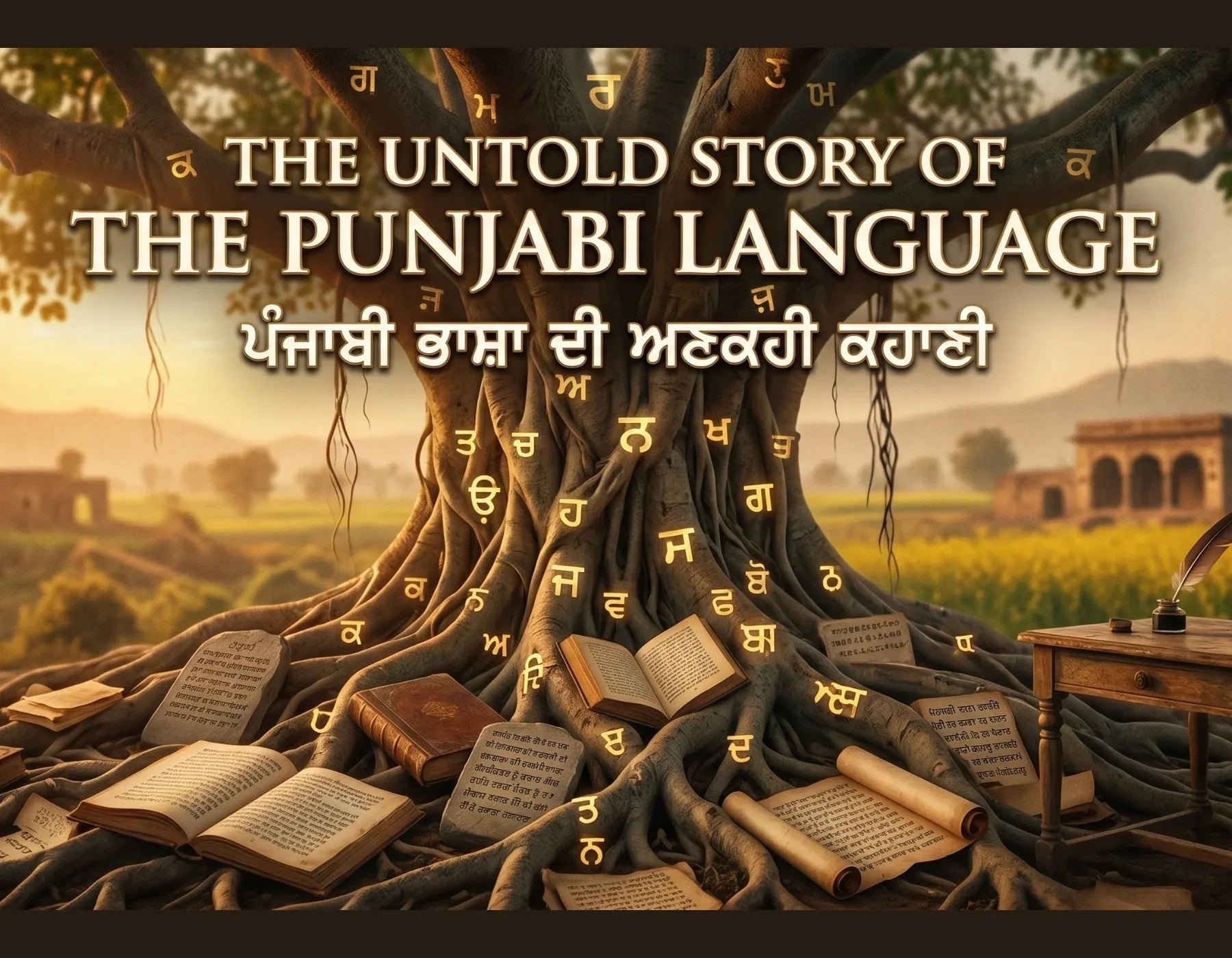
The Untold Story of the Punjabi Language
Origins of the Punjabi Language
Punjabi is more than just a language—it’s a living, breathing expression of centuries of history, migration, conquest, and culture. When you hear Punjabi spoken, whether it’s in a bustling street in Lahore or a lively family gathering in Toronto, you’re actually listening to echoes of ancient civilizations that go back thousands of years. But here’s the thing most people don’t realize: Punjabi didn’t just appear out of nowhere. It evolved slowly, shaped by waves of people, ideas, and empires that left their mark on the fertile lands of Punjab.
The word “Punjab” itself means “land of five rivers,” and those rivers didn’t just nourish crops—they nurtured language. Over time, different tribes and communities settled in this region, each bringing their own dialects and ways of speaking. These languages began to blend, clash, and merge, forming something new. Punjabi emerged not as a single invention, but as a natural evolution—like a river formed from countless streams.
What makes Punjabi fascinating is its resilience. Despite invasions, colonization, and even political division, it has managed to survive and thrive. It has absorbed influences while still maintaining its core identity. And that’s what makes its story so compelling—it’s not just about words and grammar, but about survival, adaptation, and cultural pride.
Let’s dig deeper into where it all began, because the roots of Punjabi stretch much further back than most people imagine.
Ancient Roots in Indo-Aryan Languages
If you trace Punjabi back far enough, you’ll find its origins in the Indo-Aryan language family, which itself is part of the larger Indo-European group. This means Punjabi is distantly related to languages like English, Spanish, and even Russian. Surprising, right? But the real story begins around 1500 BCE, when Indo-Aryan tribes migrated into the Indian subcontinent.
These early settlers brought with them their own dialects, which gradually evolved as they interacted with local populations. Over time, these dialects formed what linguists call Old Indo-Aryan languages, with Vedic Sanskrit being the most prominent. While Punjabi didn’t directly descend from Sanskrit in a straightforward way, it was heavily influenced by it.
Think of it like a family tree. Sanskrit is like a distant ancestor, and Punjabi is one of the many descendants that branched out over time. But unlike a neat, linear progression, this evolution was messy. Languages mixed, split, and reformed depending on geography, trade, and cultural exchange.
As centuries passed, these early forms transformed into Middle Indo-Aryan languages, also known as Prakrits. These were the everyday languages spoken by common people, unlike Sanskrit, which was more formal and used in religious texts. Punjabi began to take shape during this phase, slowly developing its own identity.
What’s truly fascinating is how Punjabi retained certain features that other languages lost. Its tonal nature, for example, sets it apart from many other Indo-Aryan languages. This tonal quality likely developed due to phonetic changes over time, giving Punjabi its distinctive sound and rhythm.
So when you hear someone speaking Punjabi today, you’re actually hearing a language that carries echoes of ancient migrations, cultural blending, and linguistic evolution spanning over 3,000 years. And that’s just the beginning of its story.
Influence of Sanskrit and Prakrit
Sanskrit often gets all the spotlight when people talk about ancient Indian languages, but the real unsung heroes in the story of Punjabi are the Prakrit languages. While Sanskrit was the language of scholars, priests, and elites, Prakrit was what people actually spoke in their daily lives. And guess what? Punjabi owes a lot more to Prakrit than it does to Sanskrit.
As society evolved, Sanskrit gradually became less dominant in everyday communication. People needed a simpler, more accessible way to express themselves, and that’s where Prakrit stepped in. These languages were less rigid, more flexible, and easier to adapt—and that adaptability played a huge role in shaping Punjabi.
Over time, different regional variations of Prakrit developed, eventually giving rise to Apabhramsha, a transitional stage between Middle Indo-Aryan languages and modern ones like Punjabi. This phase is crucial because it’s where we start to see features that are distinctly “Punjabi-like.”
For instance, many common Punjabi words can be traced back to Prakrit roots rather than Sanskrit. The grammar also became more simplified, moving away from the complex structures of classical Sanskrit. This made the language more practical for everyday use, helping it spread among the masses.
But Sanskrit didn’t disappear entirely. It continued to influence Punjabi, especially in religious and literary contexts. Many Punjabi words still have Sanskrit origins, particularly those related to spirituality, philosophy, and traditional practices. It’s like Sanskrit became the formal backbone, while Prakrit provided the everyday flesh and blood of the language.
This blend created a rich linguistic tapestry. Punjabi became a language that could be both poetic and practical, sacred and street-level. It could convey deep philosophical ideas as well as everyday conversations with equal ease.
And that duality is part of what makes Punjabi so powerful. It’s not just a language of the past—it’s a language that has continuously evolved, absorbing influences while staying true to its roots.
The Evolution Through Empires
Language doesn’t evolve in isolation—it moves with people, and people move through power, conquest, and cultural exchange. Punjabi is a perfect example of this. Its journey isn’t just linguistic; it’s deeply political and historical. As empires rose and fell across the Punjab region, each one left its fingerprints on the language, subtly reshaping its vocabulary, tone, and cultural significance.
Punjab has always been a crossroads—a gateway between Central Asia and the Indian subcontinent. Because of this, it witnessed countless invasions and migrations, from the Aryans to the Persians, Greeks, Turks, and Mughals. Every group brought something new, whether it was administrative systems, religious ideas, or linguistic influences. Punjabi absorbed these influences like a sponge, but it didn’t lose itself in the process. Instead, it transformed.
One of the most interesting aspects of Punjabi’s evolution is how it remained the language of the people, even when rulers spoke something entirely different. Courts and administrations often used Persian or later Urdu, while Punjabi continued to thrive in homes, markets, and fields. This divide between “official” and “spoken” language created a unique dynamic where Punjabi became deeply rooted in everyday life, rather than elite institutions.
You could say Punjabi grew from the ground up, not the top down. It was shaped by farmers, traders, poets, and mystics—not just kings and scholars. And that grassroots evolution gave it a certain authenticity that many other languages struggle to maintain.
Let’s zoom in on two major historical phases that played a crucial role in shaping Punjabi: the Vedic period and the era of Persian and Mughal influence.
Punjabi During the Vedic Period
The Vedic period, which dates back to around 1500–500 BCE, is often associated with the composition of the Rigveda, one of the oldest known texts in the world. While Punjabi as a distinct language didn’t exist yet, the region of Punjab was central to Vedic civilization. This means the linguistic foundations that would eventually give rise to Punjabi were already being laid during this time.
Back then, the primary language was Vedic Sanskrit, used mainly for religious rituals and hymns. But here’s the catch: the language spoken by ordinary people was already beginning to diverge from this formal version. These early spoken dialects were simpler, more flexible, and more adaptable—traits that would later define Punjabi.
The geography of Punjab also played a crucial role. With its fertile lands and river systems, it became a hub for agriculture and settlement. This led to increased interaction among different communities, which in turn accelerated linguistic evolution. Words were borrowed, pronunciations shifted, and new expressions emerged.
Another key factor was oral tradition. Knowledge during the Vedic period was primarily transmitted orally, which meant language had to be memorable and rhythmic. This emphasis on sound and rhythm can still be seen in Punjabi today, especially in its poetry and music. Ever noticed how Punjabi songs have a certain bounce and flow? That’s not a coincidence—it’s a legacy of ancient oral traditions.
Even though we can’t point to a specific moment and say, “This is when Punjabi was born,” we can see clear traces of its ancestry in this period. The seeds were planted here, and over the centuries, they would grow into a fully developed language with its own identity.
Impact of Persian and Mughal Rule
Fast forward to the medieval period, and the story takes a dramatic turn. Starting around the 11th century, the Punjab region came under the influence of Persian-speaking rulers, followed by the Mughal Empire. This era introduced a completely new layer to Punjabi’s evolution—one that significantly enriched its vocabulary and cultural depth.
Persian became the language of administration, literature, and high culture. If you wanted to work in government or gain social prestige, you had to know Persian. But Punjabi didn’t disappear—instead, it began to borrow heavily from Persian and later from Arabic, which often came through Persian.
Words related to governance, art, architecture, and even everyday life started to reflect this influence. For example, many Punjabi words for emotions, relationships, and abstract concepts have Persian roots. This blending created a linguistic fusion that gave Punjabi a richer, more expressive vocabulary.
The Mughal period also brought with it a flourishing of art and literature. While Persian dominated the courts, Punjabi found its voice in Sufi poetry and folk traditions. Sufi saints like Bulleh Shah and Shah Hussain used Punjabi to communicate spiritual ideas in a way that was accessible to ordinary people. They deliberately chose Punjabi over Persian because they wanted their message to reach the masses.
This was a turning point. Punjabi was no longer just a spoken language—it became a powerful medium for philosophy, spirituality, and artistic expression. It carried emotions, challenged social norms, and connected people across religious and cultural divides.
What’s fascinating is how Punjabi managed to absorb Persian influence without losing its core identity. Instead of being replaced, it adapted. It took what it needed and made it its own. That’s the hallmark of a resilient language.
And if you listen closely to modern Punjabi today, you’ll still hear echoes of that era—in its words, its poetry, and even its expressions of love and longing.
Scripts of Punjabi Language
One of the most unique aspects of Punjabi is that it doesn’t have just one script—it has two major ones: Gurmukhi and Shahmukhi. This dual-script identity isn’t just a linguistic feature; it’s a reflection of the region’s complex history, especially the impact of religion, politics, and partition.
Unlike many languages that are tied to a single writing system, Punjabi exists in two parallel forms, depending on geography and community. In India, it’s primarily written in Gurmukhi, while in Pakistan, Shahmukhi is the dominant script. Both represent the same spoken language, but they look entirely different on paper.
This can feel a bit like two siblings who grew up in different households—same roots, different expressions. And understanding these scripts is key to understanding the full story of Punjabi.
Gurmukhi Script
The Gurmukhi script is most commonly associated with Sikhism and is used primarily in the Indian state of Punjab. It was standardized in the 16th century by Guru Angad Dev Ji, the second Sikh Guru, who refined earlier scripts to create a more consistent and accessible writing system.
The word “Gurmukhi” literally means “from the mouth of the Guru,” which highlights its spiritual significance. It was designed not just as a tool for communication, but as a means to preserve and spread the teachings of Sikh Gurus. The Guru Granth Sahib, the holy scripture of Sikhism, is written in Gurmukhi, making the script deeply sacred for millions of people.
What makes Gurmukhi particularly interesting is its phonetic nature. Each character corresponds closely to a specific sound, making it relatively straightforward to learn compared to more complex scripts. This phonetic clarity helped standardize Punjabi and made it easier to teach and preserve.
Gurmukhi also played a crucial role in elevating Punjabi’s status. Before its standardization, Punjabi was often seen as a “low” or informal language compared to Persian or Sanskrit. But with a formal script and religious backing, it gained legitimacy and recognition.
Today, Gurmukhi is used in education, media, and literature across Indian Punjab. It has become a symbol of cultural identity and pride, especially among Sikhs. And in the digital age, it’s adapting once again—now appearing in Unicode fonts, social media, and online platforms.
Shahmukhi Script
On the other side of the border, in Pakistan, Punjabi is written in the Shahmukhi script, which is derived from the Perso-Arabic script. The name “Shahmukhi” roughly translates to “from the King’s mouth,” reflecting its historical association with Persian and later Mughal administration.
Shahmukhi developed as Punjabi speakers adapted the Persian script to fit their own language. Since Persian was already widely used in administration and literature, it made sense to use a familiar script rather than create a new one. Over time, additional letters and modifications were introduced to represent sounds unique to Punjabi.
Visually, Shahmukhi looks very different from Gurmukhi. It’s written from right to left, like Arabic and Urdu, and has a more cursive, flowing style. This can make it challenging for those accustomed to Gurmukhi, even though the underlying language is the same.
Despite its rich history, Shahmukhi has faced challenges in terms of standardization and official support. In Pakistan, Urdu is the national language, and Punjabi, although widely spoken, doesn’t always receive the same level of institutional backing. As a result, Shahmukhi literacy isn’t as widespread as you might expect.
Still, Shahmukhi remains deeply embedded in cultural expression, especially in poetry, music, and oral storytelling. It carries the legacy of Sufi literature and continues to be a vital part of Punjabi identity in Pakistan.
Two scripts, one language—each telling its own version of the same story. And together, they reveal just how complex and fascinating Punjabi truly is.
Punjabi in Literature and Culture
If you really want to understand the soul of a language, don’t start with its grammar—start with its stories. Punjabi isn’t just spoken; it’s sung, recited, and performed. Its true power lies in its ability to capture raw human emotion—love, loss, rebellion, devotion—in ways that feel deeply personal yet universally relatable. Over centuries, Punjabi has built a rich literary and cultural tradition that thrives not in elite academic circles, but in the hearts of ordinary people.
What sets Punjabi literature apart is its accessibility. Unlike languages that were historically tied to royal courts or religious elites, Punjabi grew through oral storytelling, folk songs, and spiritual poetry. It didn’t need gatekeepers. Farmers, mystics, lovers, and wanderers all contributed to its growth. This grassroots origin gave Punjabi literature a certain authenticity—you don’t just read it, you feel it.
Music plays a huge role here. Ever noticed how Punjabi songs often feel like storytelling sessions? That’s because they are. Whether it’s a wedding song, a heartbreak anthem, or a devotional hymn, there’s always a narrative woven into the rhythm. The language lends itself naturally to musical expression, with its tonal quality and rhythmic flow making it ideal for poetry and song.
But the real magic lies in how Punjabi literature bridges the gap between the spiritual and the everyday. A poem about divine love can sound like a lover’s confession. A folk tale can carry deep philosophical meaning. This blending of the sacred and the ordinary is what makes Punjabi culture so layered and compelling.
To truly grasp this richness, we need to look at two of its most powerful pillars: Sufi poetry and oral folklore traditions.
Sufi Poetry and Spiritual Influence
Punjabi Sufi poetry isn’t just literature—it’s an experience. It’s the kind of poetry that doesn’t sit quietly on a page; it demands to be sung, felt, and lived. Between the 16th and 18th centuries, Sufi saints like Bulleh Shah, Waris Shah, Sultan Bahu, and Shah Hussain transformed Punjabi into a language of spiritual awakening.
Here’s what made their work revolutionary: they chose Punjabi over elite languages like Persian or Arabic. Why? Because they wanted their message to reach everyone—not just scholars or rulers. They spoke directly to the people, using simple words to express complex spiritual ideas.
Take Bulleh Shah, for example. His verses often challenged religious orthodoxy and social divisions. He questioned authority, rejected rigid identities, and emphasized love as the ultimate path to the divine. One of his famous lines loosely translates to: “Bulleya, who am I?”—a simple question that opens the door to deep existential reflection.
Sufi poetry in Punjabi often uses metaphors of love and longing. The separation between a lover and the beloved becomes a symbol for the human soul’s distance from God. This makes the poetry deeply emotional and relatable. You don’t need to be a scholar to understand it—you just need to feel.
Another fascinating aspect is how this poetry blurred religious boundaries. Muslims, Hindus, and Sikhs all embraced these works. In a region often marked by division, Punjabi Sufi poetry became a unifying force.
Even today, these poems are alive—sung in qawwalis, quoted in conversations, and shared across social media. They’ve stood the test of time because they speak to something universal: the human search for meaning.
Folklore and Oral Traditions
Before printing presses and digital platforms, stories lived in people’s voices—and Punjabi has one of the richest oral traditions in the world. These stories weren’t just entertainment; they were a way of preserving history, values, and identity.
Think of legendary love stories like Heer Ranjha, Sohni Mahiwal, Mirza Sahiban, and Sassi Punnun. These aren’t just romantic tales—they’re cultural touchstones. Each story carries layers of meaning, touching on themes like societal pressure, honor, sacrifice, and rebellion.
Take Heer Ranjha, for instance. On the surface, it’s a tragic love story. But dig deeper, and it becomes a critique of rigid social norms and class divisions. Waris Shah’s version of this tale is considered a masterpiece of Punjabi literature, blending poetic beauty with sharp social commentary.
What’s fascinating is how these stories have been passed down through generations. Grandparents tell them to children, singers turn them into ballads, and filmmakers adapt them for modern audiences. The core narrative remains the same, but each retelling adds a new layer.
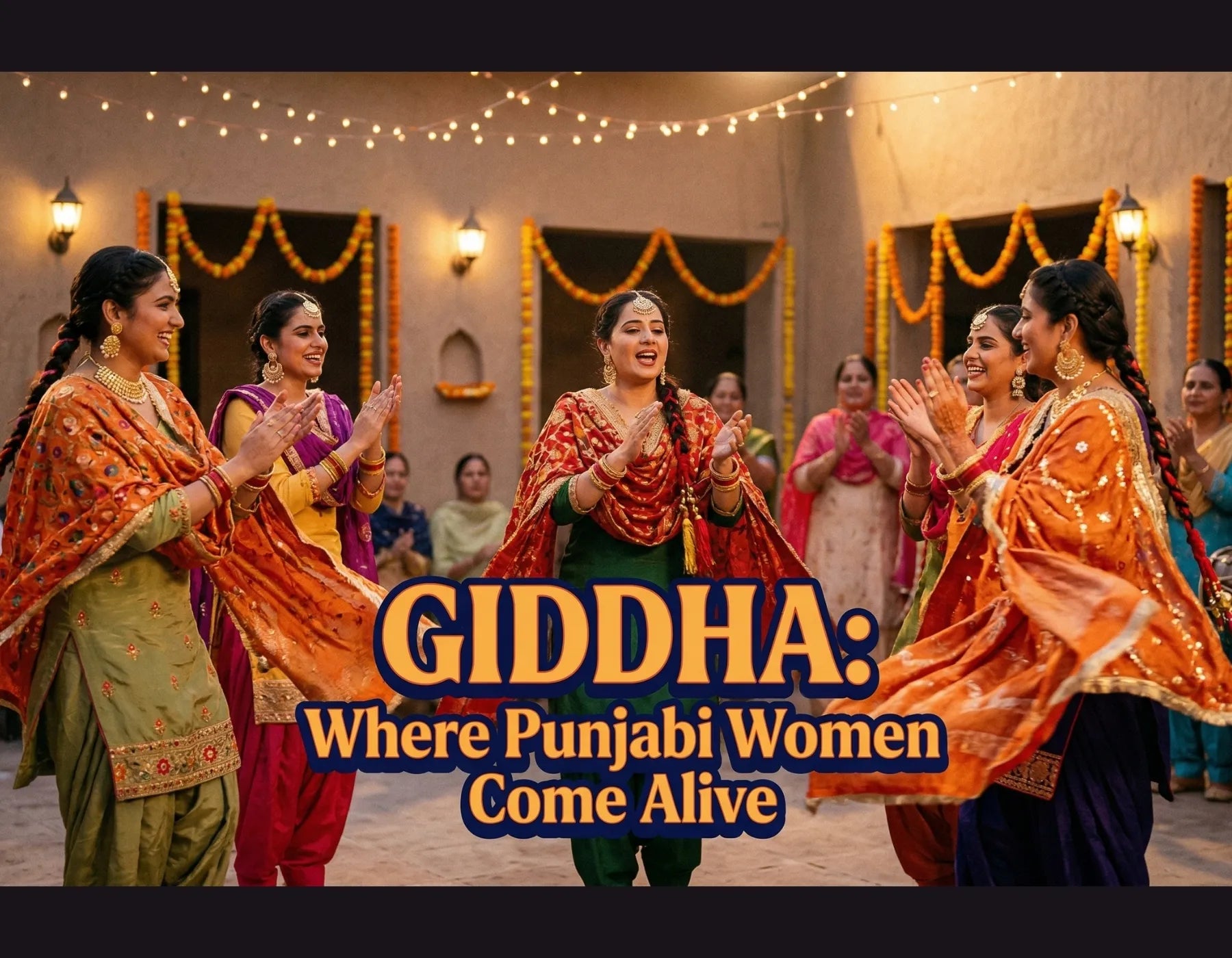
Folk songs, known as “boliyan” and “tappay,” also play a crucial role. They’re often improvised, witty, and full of emotion. Whether it’s teasing during a wedding or expressing heartbreak, these songs capture real-life experiences in a way that feels immediate and authentic.
This oral tradition keeps Punjabi dynamic. It’s not frozen in time—it evolves with every storyteller, every singer, every listener. And that’s what keeps it alive, even in an age dominated by screens and algorithms.
The Partition and Its Linguistic Impact
Few events have shaped Punjabi as profoundly as the Partition of India in 1947. It wasn’t just a political division—it was a cultural and linguistic earthquake. Almost overnight, Punjab was split into two parts: one in India and the other in Pakistan. And with that division came a transformation that still echoes today.
Before Partition, Punjabi was a shared language across the region, spoken by people of different religions and communities. It was a unifying force. But after 1947, language became entangled with identity in a much more rigid way.
Millions of people were displaced, forced to leave their homes and rebuild their lives across newly drawn borders. In this chaos, language didn’t just survive—it adapted. But the adaptation came at a cost.
Punjabi, once a bridge, began to reflect division. Scripts diverged, cultural expressions evolved separately, and political priorities shifted. The same language started to feel like two different worlds.
To understand this transformation, we need to look at both the immediate division and its long-term consequences.
Division Between India and Pakistan
When British India was partitioned, Punjab was split based on religious demographics. The western part became part of Pakistan, while the eastern part remained in India. This division wasn’t just geographic—it reshaped how Punjabi was written, taught, and perceived.
In India, Punjabi became closely associated with Sikh identity. The Gurmukhi script gained official recognition, and Punjabi was eventually declared the official language of the Indian state of Punjab. Schools began teaching it, literature flourished, and it gained institutional support.
In Pakistan, the situation was quite different. Despite Punjabi being the most widely spoken language in the country, Urdu was chosen as the national language. This decision was driven by political and cultural factors, aiming to create a unified national identity.
As a result, Punjabi in Pakistan remained largely a spoken language. While Shahmukhi continued to be used in literature and poetry, it didn’t receive the same level of official backing as Urdu. This created a gap between how widely Punjabi was spoken and how much it was formally supported.
The division also affected cultural exchange. Before Partition, ideas and stories flowed freely across the region. Afterward, borders made that exchange more difficult, leading to distinct cultural trajectories on each side.
Cultural and Linguistic Consequences
The long-term effects of Partition on Punjabi are complex and, in some ways, contradictory. On one hand, the language continued to thrive in everyday life. On the other, it faced challenges in terms of prestige and institutional support—especially in Pakistan.
In India, Punjabi experienced a kind of revival. It became a symbol of regional pride and identity, supported by education, media, and government policies. Punjabi cinema, literature, and music saw significant growth, helping the language stay relevant in modern times.
In Pakistan, however, Punjabi often took a backseat to Urdu and English in formal settings. Many urban families began speaking Urdu at home to align with social and educational aspirations. This led to a gradual decline in Punjabi literacy, even though it remained widely spoken.
Another interesting consequence is how the diaspora has interacted with Punjabi. Migrants from both sides of Punjab carried their language abroad, where it often became a key part of cultural identity. In places like the UK, Canada, and Australia, Punjabi has found new life—sometimes even bridging the divide created by Partition.
What’s striking is how Punjabi has managed to survive despite these challenges. It has adapted to new realities while holding on to its core essence. It’s still spoken, sung, and celebrated by millions around the world.
But the story doesn’t end here. In the modern era, Punjabi is facing a new set of challenges—and opportunities—that will shape its future in ways we’re only beginning to understand.
Punjabi in Modern Times
Step into the 21st century, and Punjabi feels like it’s everywhere—and yet, not always where you’d expect. It’s booming in global music charts, echoing through international film industries, and thriving in diaspora communities. At the same time, in some of its native regions, it’s quietly losing ground in formal spaces like education and administration. This contrast makes modern Punjabi a fascinating paradox: globally influential but locally challenged.
One of the biggest reasons for Punjabi’s modern resurgence is its adaptability. Unlike languages that struggle to keep up with digital trends, Punjabi has embraced them. Social media platforms like YouTube, TikTok, and Instagram are filled with Punjabi content—from comedy skits and poetry recitations to music videos that rack up hundreds of millions of views. This digital explosion has given Punjabi a new kind of visibility, especially among younger audiences.
Music, in particular, has been a game-changer. Artists like Diljit Dosanjh, Sidhu Moosewala, AP Dhillon, and Jazzy B have taken Punjabi music far beyond regional boundaries. It’s now common to hear Punjabi tracks in clubs from London to Toronto to Melbourne. According to industry estimates, Punjabi music is one of the fastest-growing regional music segments globally, with billions of streams annually across platforms like Spotify and YouTube.
Cinema has followed a similar path. Punjabi films, once considered niche, are now gaining international audiences. Streaming platforms have made it easier than ever for people to access Punjabi content, breaking down geographical barriers that once limited its reach.
But here’s the twist: while Punjabi is thriving globally, its position in formal education and governance remains uneven, especially in Pakistan. This creates a strange situation where a language can dominate pop culture yet struggle for institutional recognition.
To fully understand this modern landscape, we need to look at two key dimensions: its global diaspora and its role in media and entertainment.
Global Presence and Diaspora
Punjabi isn’t confined to Punjab anymore—it’s a global language. Thanks to migration over the past century, Punjabi-speaking communities have established strong roots in countries like Canada, the United Kingdom, the United States, and Australia. In fact, Punjabi is now one of the most widely spoken languages in Canada. According to recent census data, it ranks among the top five most spoken languages in the country.
Walk through neighborhoods in cities like Brampton, Vancouver, or Southall in London, and you’ll hear Punjabi everywhere—on the streets, in shops, at community events. It’s not just a language; it’s a cultural anchor that helps people stay connected to their roots while navigating life in a new country.
What’s interesting is how the diaspora has influenced the language itself. Punjabi spoken abroad often blends with English, creating hybrid forms sometimes called “Pinglish.” You’ll hear sentences that switch seamlessly between languages, reflecting the realities of multicultural life.
The diaspora has also played a crucial role in preserving Punjabi. In some cases, it’s actually more actively promoted abroad than in its native regions. Community schools, cultural organizations, and religious institutions teach Punjabi to younger generations, ensuring it doesn’t fade away.
At the same time, there’s a tension. Younger generations, especially those born abroad, may not speak Punjabi as fluently as their parents. English often becomes the dominant language, leading to concerns about long-term preservation.
Still, the diaspora has given Punjabi something invaluable: a global stage. It’s no longer just a regional language—it’s part of a worldwide cultural network.
Punjabi in Media and Entertainment
If language is power, then Punjabi has found one of its strongest expressions in entertainment. Music, films, and digital content have become the driving forces behind its modern identity.
Punjabi music, in particular, has undergone a transformation. It has moved from traditional folk and devotional songs to a diverse range of genres, including hip-hop, pop, rap, and fusion. This evolution has made it more accessible to global audiences. Collaborations with international artists have further expanded its reach, blending Punjabi lyrics with Western beats.
Platforms like YouTube have been instrumental in this growth. Some Punjabi music videos have crossed over 1 billion views, putting them in the same league as global pop hits. This kind of visibility not only boosts the artists but also elevates the language itself.
Punjabi cinema, often referred to as Pollywood, has also seen significant growth. While it may not rival Bollywood in scale, it has carved out a strong niche. Films often focus on themes like family, migration, and cultural identity, resonating deeply with both local and diaspora audiences.
Social media has added another layer. Influencers and content creators use Punjabi to connect with audiences in a more personal and relatable way. Memes, short videos, and storytelling content keep the language fresh and relevant.
This cultural dominance in entertainment has helped Punjabi maintain its vibrancy. Even people who don’t speak the language fluently often engage with it through music and films. It’s a reminder that language isn’t just about communication—it’s about experience.
Challenges Facing Punjabi Language
For all its global success, Punjabi is facing some serious challenges that can’t be ignored. The issue isn’t whether Punjabi will disappear overnight—it’s more subtle than that. The real concern is whether it will lose depth, richness, and everyday relevance over time.
One of the biggest challenges is the decline in usage among younger generations, especially in urban areas. In many families, parents choose to speak in English or Urdu/Hindi with their children, believing it will give them better opportunities. While this decision is understandable, it often comes at the cost of linguistic heritage.
Another major issue is the lack of consistent support in education systems, particularly in Pakistan. When a language isn’t used as a medium of instruction, it struggles to maintain its status and utility.
Let’s break down these challenges further.
Declining Usage Among Youth
Language survival isn’t just about how many people speak it—it’s about who speaks it. And right now, Punjabi is facing a generational shift.
In urban areas, especially, many young people understand Punjabi but don’t speak it fluently. They might respond in Urdu or English, even when spoken to in Punjabi. Over time, this passive understanding can lead to active loss.
Why is this happening? Part of it is perception. Punjabi is sometimes seen as less “formal” or less useful compared to global languages like English. This perception influences how families and schools prioritize language learning.
There’s also the influence of media. While Punjabi content is popular, much of mainstream education and professional communication happens in other languages. This creates a disconnect between cultural consumption and practical usage.
The risk here isn’t immediate extinction—it’s gradual erosion. Vocabulary shrinks, expressions simplify, and the richness of the language fades.
Education and Policy Issues
Language policy plays a huge role in determining a language’s future. In India, Punjabi has official status in the state of Punjab, which helps support its use in schools and administration. But even there, English often dominates higher education and professional spaces.
In Pakistan, the situation is more challenging. Despite being the most widely spoken language in the country, Punjabi lacks official status at the national level. Urdu and English dominate education, media, and government.
This creates a gap between spoken and written language. Many people can speak Punjabi fluently but struggle to read or write it. This limits its use in literature, academia, and formal communication.
Experts often emphasize that for a language to thrive, it needs institutional support. As linguist David Crystal once noted, “A language does not die because its speakers stop speaking it, but because they stop passing it on.”
That’s the real challenge Punjabi faces today—not disappearance, but disconnection.
The Future of Punjabi Language
So where does Punjabi go from here? Is it at risk, or is it simply evolving into something new? The answer lies somewhere in between.
Punjabi has proven its resilience time and again. It has survived invasions, colonization, and partition. It has adapted to new technologies and global trends. There’s no reason to believe it will suddenly vanish. But survival alone isn’t enough—the goal is to thrive.
The future of Punjabi will depend on how well it balances tradition with modernity. Can it remain relevant in education and professional life while continuing to dominate in culture and entertainment? Can it bridge the gap between generations?
There are signs of hope. Digital platforms are making it easier than ever to create and share content in Punjabi. Language-learning apps, online courses, and social media communities are helping people reconnect with their roots.
Let’s explore what’s being done—and why it matters.
Revival Efforts and Digital Growth
Across the world, there’s a growing awareness about the importance of preserving linguistic diversity—and Punjabi is part of that movement. Community initiatives, cultural organizations, and even tech platforms are stepping in to support the language.
Apps and websites now offer Punjabi learning tools, making it easier for younger generations and diaspora communities to pick up the language. Unicode support has made it possible to use both Gurmukhi and Shahmukhi scripts online, opening up new avenues for communication.
Social media is playing a surprisingly powerful role. صفحات (pages), podcasts, and YouTube channels dedicated to Punjabi language and culture are gaining traction. These platforms make learning informal, engaging, and accessible.
Even academic interest is growing. Universities around the world offer Punjabi language courses, recognizing its global significance.
All of this points to a digital revival—one that doesn’t rely on traditional institutions alone.
Why Punjabi Still Matters
At its core, Punjabi is more than just a means of communication—it’s a carrier of identity, history, and emotion. When a language fades, it’s not just words that are lost; it’s ways of thinking, storytelling, and connecting.
Punjabi matters because it tells stories that no other language can tell in quite the same way. It carries the humor, resilience, and spirit of its people. It connects generations, linking the past with the present.
In a world that’s becoming increasingly globalized, there’s a tendency to prioritize a few dominant languages. But diversity is what makes culture rich. Punjabi adds its own unique voice to that global conversation.
The real question isn’t whether Punjabi will survive—it’s how it will evolve. And that evolution depends on the choices people make every day: which language they speak at home, which stories they tell, which songs they sing.
Conclusion
The story of the Punjabi language isn’t a straight line—it’s a winding journey shaped by history, culture, and human experience. From its ancient Indo-Aryan roots to its modern global presence, Punjabi has continuously adapted while holding on to its essence.
It has been the language of farmers and poets, saints and rebels, lovers and storytellers. It has crossed borders, survived political upheavals, and found new life in unexpected places. Few languages can claim such a rich and dynamic history.
Yet, its future isn’t guaranteed. Like any living language, Punjabi depends on its speakers—their choices, their priorities, and their willingness to pass it on.
The untold story of Punjabi isn’t just about the past. It’s still being written, every day, in conversations, songs, and stories across the world.
FAQs
1. Is Punjabi one of the most spoken languages in the world?
Yes, Punjabi is among the top 10 most spoken languages globally, with over 125 million speakers worldwide, including large diaspora communities.
2. Why does Punjabi have two scripts?
Punjabi uses Gurmukhi in India and Shahmukhi in Pakistan due to historical, religious, and political influences, especially after the Partition in 1947.
3. Is Punjabi declining as a language?
Punjabi is not disappearing, but it faces challenges like reduced usage among youth and lack of institutional support in some regions.
4. How has Punjabi music influenced global culture?
Punjabi music has gained massive international popularity, influencing global pop and hip-hop scenes with billions of online streams.
5. What makes Punjabi unique compared to other languages?
Punjabi stands out for its tonal nature, rich oral traditions, emotional depth, and its ability to blend cultural and spiritual expression.