ਲੇਖ: Old Punjabi Values That Still Hit Different Today
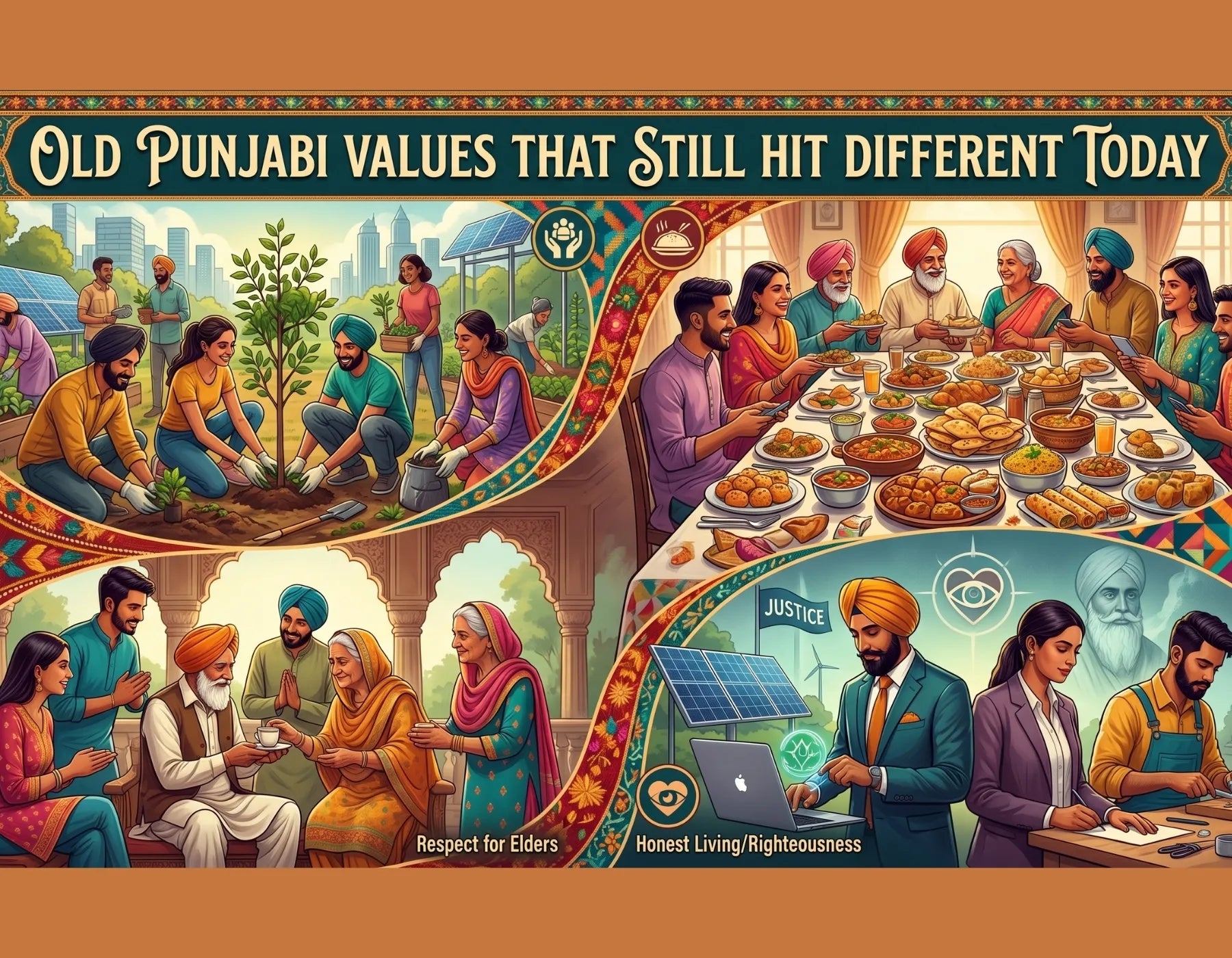
Old Punjabi Values That Still Hit Different Today
Introduction to Punjabi Cultural Values
What Makes Punjabi Culture Unique
Punjabi culture carries a kind of energy that you don’t just observe—you feel it. It’s loud, colorful, emotional, and deeply rooted in traditions that have survived generations of change. Think about it: from the rhythm of dhol beats echoing through weddings to the warmth of a stranger offering you food without hesitation, Punjabi culture thrives on human connection. What really sets it apart is how values are not just taught—they’re lived daily, almost subconsciously. These aren’t abstract ideas written in books; they show up in the way people greet each other, how they host guests, and how they show up during someone’s worst days.
There’s also a certain fearlessness embedded in Punjabi identity. Historically, Punjab has faced invasions, partitions, and hardships, yet its people have always bounced back with unmatched resilience. This resilience isn’t accidental—it’s built on values passed down like heirlooms. Whether it’s respect, hard work, or community spirit, these principles shape behavior in a way that feels natural rather than forced. Even younger generations, growing up in cities or abroad, often find themselves reconnecting with these values when life gets overwhelming.
And here’s the thing—Punjabi culture doesn’t try to be minimal or subtle. It’s expressive. It celebrates life openly. That openness creates a sense of belonging that’s hard to replicate elsewhere. In a world where many cultures are slowly diluting under modernization, Punjabi traditions still hold strong because they adapt without losing their essence. That’s exactly why old Punjabi values still hit differently today—they’re timeless, relatable, and incredibly human.
Why Old Values Still Matter in Modern Life
It’s easy to assume that old-school values lose relevance in today’s fast-paced, tech-driven world. But Punjabi values challenge that assumption in a big way. If anything, they feel more necessary now than ever. When everything around us is becoming more transactional—relationships, work, even communication—these traditional values act like a grounding force. They remind people what it means to be genuinely human in a world that’s increasingly digital.
Take respect, for example. In Punjabi culture, respect isn’t conditional or selective. It’s deeply ingrained. You greet elders properly, you listen when someone speaks, and you carry yourself with a sense of humility. Compare that to modern environments where people often prioritize speed over sincerity. That contrast is exactly why these values stand out—they slow you down in the best possible way.
Another reason these values still resonate is because they create emotional security. In a time where loneliness is becoming a global issue, the Punjabi emphasis on family and community offers a powerful antidote. You’re rarely left to deal with struggles alone. There’s always someone checking in, offering help, or simply sitting beside you in silence. That kind of support system isn’t just comforting—it’s essential.
Old Punjabi values also bring a sense of identity. With globalization blurring cultural boundaries, people often struggle with belonging. These values anchor individuals to something meaningful, something bigger than themselves. They’re not outdated—they’re foundational. And in many ways, they’re exactly what modern life is missing.
The Core of Punjabi Identity
The Spirit of ‘Pind’ Life
The word “pind” isn’t just a geographical term—it’s an emotion. It represents village life, where everything moves a little slower but feels a lot richer. In a pind, people know each other not just by name but by story. There’s a sense of familiarity that creates comfort, like an unspoken understanding that you’re never truly alone. This spirit is one of the strongest pillars of old Punjabi values.
Life in a pind revolves around simplicity and connection. Mornings start early, often with the sound of roosters or tractors, and evenings wind down with conversations that stretch under open skies. There’s no rush to escape into screens because real-life interactions are more fulfilling. People gather not out of obligation but because they genuinely enjoy each other’s company.
What’s fascinating is how this spirit continues to influence Punjabis even after they move to cities or abroad. You’ll often see people recreating that sense of community—whether it’s through gatherings, cultural events, or simply maintaining close relationships. It’s like carrying a piece of the pind wherever you go.
The pind also teaches important life lessons. It shows the value of cooperation, patience, and shared responsibility. When someone is in trouble, the entire community steps in. That collective mindset is rare in urban settings, where independence often overshadows interdependence. Yet, it’s exactly this quality that makes pind life so special—and so relevant even today.
Deep Connection with Land and Roots
Punjabi identity is deeply tied to the land. Agriculture isn’t just an occupation—it’s a way of life that shapes values, habits, and even perspectives. There’s a profound respect for nature, seasons, and the effort it takes to cultivate something from the ground up. This connection builds patience, discipline, and gratitude in ways that modern lifestyles often overlook.
Working on the land teaches you that results don’t come instantly. You plant seeds, nurture them, and wait. That process instills resilience because not every harvest is perfect. Sometimes weather conditions fail, sometimes crops don’t yield as expected. Yet, the commitment remains. This mindset translates into other areas of life, encouraging persistence even when things don’t go as planned.
There’s also a strong emotional attachment to ancestral land. It represents heritage, history, and identity. Many Punjabis, even those living overseas, feel a pull toward their roots. Visiting their village or maintaining ties with their homeland becomes more than just a trip—it’s a way to stay connected to who they are.
In today’s fast-moving world, where people often feel disconnected from nature, this value stands out. It reminds us to slow down, appreciate the process, and stay grounded. That’s why the connection with land and roots still hits differently—it offers a sense of stability in an otherwise chaotic environment.
Value of Respect (Satkar)
Respect for Elders and Authority
Respect, or satkar, sits at the heart of old Punjabi values, and it’s not treated like a formal rule—it’s more like breathing. From a young age, children are taught to stand up when elders enter a room, speak politely, and listen without interrupting. It’s not about fear or hierarchy alone; it’s about recognizing experience and acknowledging the journey someone has already walked. In Punjabi households, elders are often seen as living libraries of wisdom, carrying stories, lessons, and warnings that shape the younger generation’s thinking.
What makes this respect stand out is how natural it feels in everyday life. It shows up in the smallest actions—offering the first bite of food to elders, touching feet as a greeting, or simply lowering your voice in their presence. Even disagreements are handled with a layer of softness when elders are involved. The idea isn’t blind obedience; it’s thoughtful consideration. You may not always agree, but you don’t dismiss.
In modern times, this value feels especially powerful because it slows down the culture of instant opinions and impulsive reactions. In a world where everyone wants to speak first, Punjabi respect culture teaches you to listen first. That shift alone can change how conflicts are handled, how families function, and how communities stay connected. It builds emotional discipline without making it feel like a burden.
Interestingly, this respect also flows both ways. Elders in Punjabi culture often reciprocate by protecting, guiding, and supporting the younger generation rather than simply commanding them. That balance is what keeps the value alive instead of turning it into rigidity.
The Role of Manners in Daily Life
Manners in Punjabi culture are not performative—they are deeply woven into social interaction. Saying “ji” after names, greeting with warmth, and acknowledging people properly are not optional behaviors; they are expected parts of communication. Even casual conversations carry a tone of politeness that reflects underlying respect. This creates an environment where people feel seen and valued, even in brief interactions.
What stands out is how manners are taught indirectly through observation. Children grow up watching adults interact, absorbing the rhythm of respectful speech and behavior. There’s less emphasis on strict rules and more on cultural modeling. You don’t just learn manners—you live them. That’s why they often stick for life, even when people move away from their native environment.
In everyday life, this translates into smoother social relationships. Conflicts tend to escalate less quickly because communication begins with respect rather than aggression. Even disagreements are framed in a way that preserves dignity. This doesn’t mean Punjabi culture avoids confrontation—it just approaches it with a sense of human decency intact.
In today’s digital communication era, where tone is often lost and misunderstandings are common, these traditional manners feel even more relevant. They remind us that how you say something is just as important as what you say. And that subtle layer of kindness is what makes old Punjabi manners still feel so impactful today.
Hospitality Like No Other (Mehmaan Nawazi)
Treating Guests Like Family
If there’s one value that instantly defines Punjabi culture, it’s mehmaan nawazi—hospitality that goes beyond expectation and into emotional generosity. A guest in a Punjabi home is not treated as an outsider but as someone who deserves comfort, care, and full attention. The moment someone steps inside, there’s an unspoken rule: they will not leave hungry, and they will not feel unwelcome.
What makes this hospitality so unique is its spontaneity. There’s no need for notice or preparation. Even unexpected guests are welcomed with enthusiasm rather than inconvenience. Chairs are pulled out quickly, conversations start naturally, and the host often prioritizes the guest’s comfort over their own schedule. This creates an atmosphere where people feel genuinely valued rather than accommodated.
The emotional layer of this value is what sets it apart. It’s not about impressing guests; it’s about making them feel like they belong. There’s a strong sense of pride in ensuring someone leaves your home happier than when they arrived. That emotional responsibility turns hospitality into something deeply personal rather than social obligation.
In modern life, where time is limited and interactions are often rushed, this level of openness feels rare. Yet it remains one of the most admired aspects of Punjabi culture because it reflects abundance of spirit, not just resources.
Food as a Symbol of Love
In Punjabi culture, food is far more than nourishment—it’s an expression of love, identity, and connection. When someone visits a Punjabi household, the first question is rarely “How are you?” but rather “Have you eaten?” That alone says a lot about priorities. Food becomes the language through which care is communicated without needing elaborate words.
Meals are often large, generous, and shared. Even if there’s enough for one, it somehow becomes enough for many. Dishes are served with pride, and refusing food is often taken personally—not out of offense, but because offering food is equivalent to offering affection. Every meal carries emotional weight, especially when prepared for guests.
Cooking itself is seen as an act of devotion. Recipes are passed down through generations, not just as instructions but as memories. The aroma of certain dishes can instantly trigger nostalgia, reminding people of childhood, family gatherings, or festivals. Food becomes a bridge between past and present.
In a modern world dominated by fast food and convenience eating, this traditional relationship with food feels deeply grounding. It reminds people that meals are not just functional—they are emotional experiences meant to be shared, enjoyed, and remembered.
Strong Family Bonds
Joint Family System and Its Strength
One of the most defining features of traditional Punjabi life is the joint family system, where multiple generations live under one roof. This structure creates a built-in support system that is both emotional and practical. Instead of isolated nuclear units, families operate like interconnected networks where responsibilities, joys, and challenges are shared collectively.
The strength of this system lies in its stability. Children grow up surrounded by grandparents, uncles, aunts, and cousins, which creates a sense of belonging from an early age. There’s always someone to talk to, someone to guide you, and someone to correct you when needed. That constant presence builds emotional resilience and reduces feelings of isolation.
Financial and practical responsibilities are also shared. Whether it’s managing household tasks, celebrating events, or dealing with hardships, everything is handled together. This reduces pressure on individuals and strengthens collective decision-making. It also teaches compromise and cooperation naturally.
Even though modern urban lifestyles have shifted toward nuclear families, the emotional blueprint of joint living still influences behavior. Many Punjabis maintain close ties with extended family, ensuring that distance doesn’t weaken connection. The value itself has adapted rather than disappeared.
Emotional Support and Togetherness
Punjabi family culture places a strong emphasis on emotional availability. It’s not enough to simply live together—people are expected to show up for each other emotionally. Whether someone is celebrating success or going through hardship, the family becomes the first point of support. This creates a safety net that is both comforting and empowering.
Conversations in Punjabi families are often expressive and direct. Feelings are not hidden behind silence or formality. Joy is celebrated loudly, and pain is shared openly. That emotional transparency helps prevent misunderstandings and builds deeper trust between family members.
Togetherness is also expressed through shared experiences—festivals, meals, weddings, and even everyday routines. These moments reinforce connection and create lasting memories. Over time, these shared experiences become the emotional glue that holds families together.
In a world where emotional isolation is increasingly common, this level of togetherness feels rare and valuable. It reminds people that support systems are not optional—they are essential for emotional well-being.
Hard Work and Resilience (Mehnat)
Farming Roots and Work Ethic
Punjabi culture has deep agricultural roots, and this background has shaped one of its strongest values: hard work. Farming is not easy—it demands early mornings, physical effort, patience, and constant adaptation to unpredictable conditions. This lifestyle naturally builds a strong work ethic where effort is valued as much as outcome.
From a young age, many Punjabis grow up witnessing labor firsthand. They see how food on the table is the result of continuous effort rather than instant success. This creates an understanding that nothing meaningful comes without persistence. Work is not glamorized—it is respected.
This value translates into modern professions as well. Whether in business, education, or creative fields, Punjabis often carry the same mindset of dedication and consistency. The idea is simple: if something is worth doing, it is worth doing properly.
Never Giving Up Mindset
Resilience is another cornerstone of Punjabi identity. Life has not always been easy historically, and that has shaped a mentality of endurance. Challenges are not seen as final roadblocks but as temporary phases that can be overcome with effort and persistence.
This mindset is reflected in everyday language and behavior. There is a cultural tendency to push forward even when circumstances are difficult. Failure is not celebrated, but it is also not feared. Instead, it is treated as part of the process.
In modern contexts, this resilience is one of the most powerful assets. It helps individuals navigate uncertainty, career challenges, and personal setbacks without losing motivation. It creates a sense of inner strength that feels deeply rooted and stable.
Community and Brotherhood (Bhaichara)
Standing Together in Tough Times
Bhaichara represents the idea of brotherhood and collective responsibility. In Punjabi culture, people don’t just coexist—they actively look out for one another. When someone faces difficulty, support often arrives without being asked. This creates a sense of security that goes beyond individual capability.
Whether it’s financial help, emotional support, or physical assistance, the community steps in naturally. There’s an unspoken understanding that no one should struggle alone if help can be provided. This strengthens trust and reduces social fragmentation.
Celebrations as Collective Joy
Celebrations in Punjabi culture are rarely private. Weddings, festivals, and achievements are shared widely, often involving extended communities. Joy becomes amplified when experienced together. Music, dance, food, and gatherings turn personal milestones into collective events.
This shared celebration reinforces bonds and creates a culture where happiness is multiplied through inclusion rather than isolation.
Simplicity and Contentment
Living a Simple Yet Fulfilling Life
Old Punjabi values emphasize simplicity over excess. Life is not about accumulating unnecessary complexity but about finding satisfaction in what already exists. This simplicity is reflected in daily routines, relationships, and expectations.
Gratitude Over Materialism
Gratitude plays a central role in shaping mindset. Instead of constantly chasing more, there is appreciation for what is already present. This creates emotional balance and reduces stress in subtle but powerful ways.
Faith and Spiritual Connection
Role of Religion in Daily Life
Faith is deeply integrated into everyday Punjabi life. It is not limited to rituals but influences behavior, decisions, and attitudes. Spirituality acts as a guiding force rather than a separate activity.
Values from Gurbani and Teachings
Teachings from Gurbani emphasize humility, service, and equality. These principles shape moral behavior and reinforce the importance of living with compassion and awareness.
Conclusion
Old Punjabi values continue to resonate because they are built on universal human needs—respect, connection, resilience, and belonging. Even in a rapidly changing world, these principles offer stability and emotional grounding. They don’t feel outdated; they feel necessary. That’s why they still hit differently today.
FAQs
1. Why are old Punjabi values still relevant today?
Because they focus on universal human needs like respect, family, and community support, which remain essential in modern life.
2. What is the most important Punjabi cultural value?
Respect (satkar) and hospitality (mehmaan nawazi) are often considered core values.
3. How does Punjabi culture view family?
Family is seen as a lifelong support system where emotional and practical needs are shared collectively.
4. Why is hospitality so important in Punjabi culture?
It reflects generosity, emotional warmth, and the belief that guests should always feel valued and cared for.
5. Has modernization affected Punjabi values?
Yes, but many values have adapted rather than disappeared, especially in diaspora communities.